Healthcare Isn’t Too Expensive. We’re Designing It Wrong.
Every year, healthcare leaders prepare for another renewal cycle knowing one thing with certainty.
Healthcare will cost more.
Premiums will increase. Prescription drug spending will increase. Behavioral health demand will increase. Employers will absorb another year of higher costs while employees pay more out of pocket.
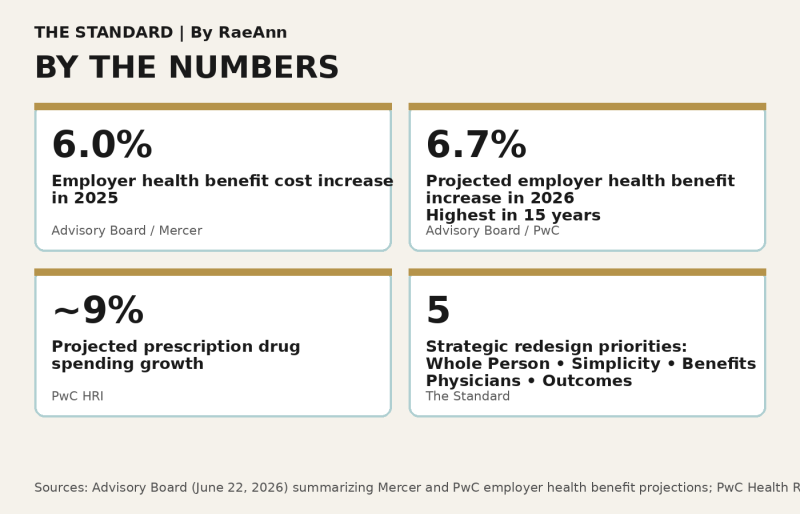
The latest data confirms what many of us already expected. Advisory Board’s analysis of Mercer and PwC employer health benefit projections estimates employer healthcare costs increased approximately 6.0% in 2025 and are projected to rise another 6.7% in 2026—the highest medical cost trend in fifteen years. Prescription drug spending alone is projected to increase roughly 9%, driven by specialty pharmaceuticals, GLP-1 therapies, cell and gene therapies, and growing behavioral health demand.
Those statistics deserve our attention, but they should also challenge our thinking.
Healthcare’s greatest problem is not inflation. It is architecture.
We have spent decades redesigning reimbursement, provider contracts, benefit plans, payment models, and technology. Yet patients still navigate one of the most fragmented systems ever created.
Healthcare has become extraordinarily sophisticated at financing illness. It has not become equally sophisticated at creating health.
Redesign Around the Whole Person
Healthcare continues to organize itself around departments. Patients do not. Annual wellness visits should become the intelligence hub for a longitudinal relationship that integrates clinical care, behavioral health, pharmacy, nutrition, women’s health, preventive services, and social determinants into one coordinated experience. AI should identify the next best action before another claim is generated.Make Complexity Invisible
The highest-cost patients are often those living with multiple chronic conditions, medications, specialists, and care plans. Healthcare has unintentionally asked our sickest patients to become project managers. The future belongs to organizations that proactively coordinate care across providers, health plans, pharmacies, and community organizations before patients experience another gap.Employers Must Purchase Health
Employer benefits should reward prevention rather than simply reimburse illness. Earlier screenings, behavioral health support, medication optimization, nutrition, musculoskeletal care, women’s health, and digital engagement produce healthier employees, stronger productivity, and lower long-term costs.Give Physicians Better Intelligence
Interoperability should become a clinical enablement strategy. Physicians need a longitudinal view of each patient enriched with medication adherence, affordability, behavioral health, social barriers, predictive risk, and evidence-based next-best actions inside their existing workflow.Align Incentives Around Outcomes
Healthcare cannot continue rewarding volume while expecting value. Health plans, health systems, physicians, pharmacies, employers, and community organizations should share accountability for healthier populations, improved quality, lower avoidable utilization, and better patient outcomes.
The Standard
Healthcare leaders are preparing for another year of rising costs. I believe we are preparing for the wrong challenge.
The organizations that define the next decade will redesign healthcare around people instead of processes. They will simplify complexity instead of managing it, empower physicians with meaningful intelligence, help employers invest in healthier workforces, and align incentives across health plans, providers, pharmacies, employers, and communities around one shared definition of success: healthier people.
Technology will accelerate this transformation.
Leadership will determine who delivers it.
That is the future of healthcare.
That is The Standard.
References:
- Advisory Board. Charted: The Soaring Healthcare Costs in the U.S. (June 22, 2026). Summarizes Mercer and PwC employer health benefit projections showing ~6.0% employer health benefit growth in 2025, a projected 6.7% increase in 2026, and ~9% prescription drug spending growth.
- Mercer. National Survey of Employer-Sponsored Health Plans (2025/2026 findings).
- PwC Health Research Institute. Medical Cost Trend: Behind the Numbers 2026.
Related Posts