Regulatory Pressure is Real: Compliance is No Longer Optional
The regulatory tone across Centers for Medicare & Medicaid Services (CMS), Office of Inspector General (OIG), and the U.S. Department of Justice (DOJ) has materially shifted—and the data proves it.
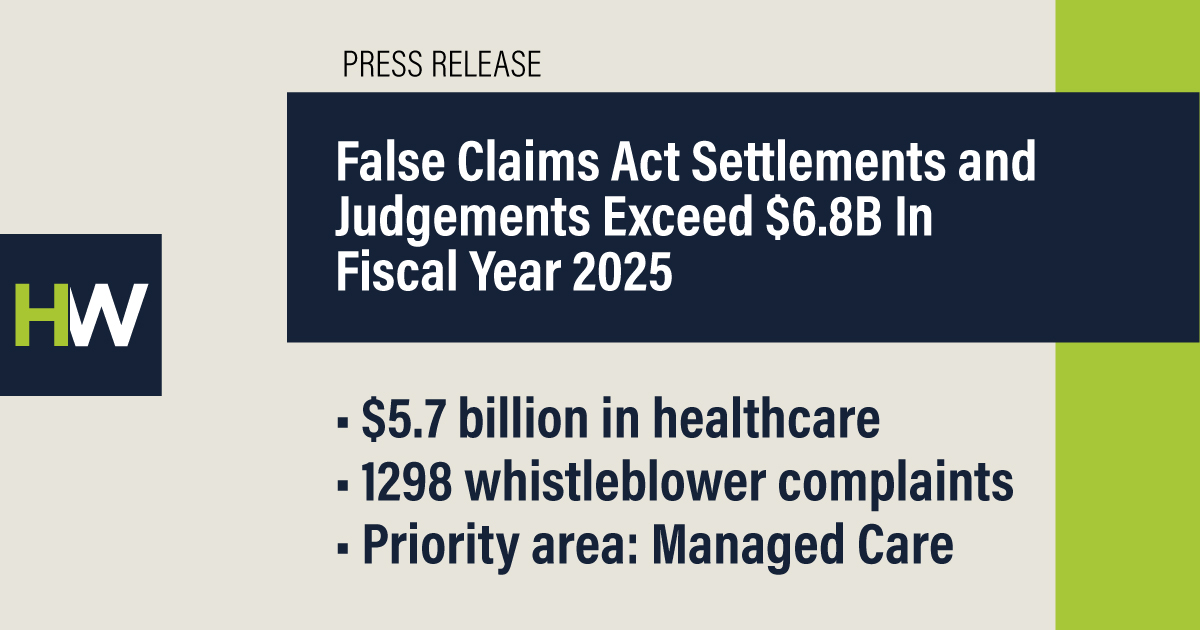
In fiscal year 2025 alone, False Claims Act settlements and judgments reached $6.8 billion—the highest in history, with over $5.7 billion tied directly to healthcare. This is not just enforcement—it is a clear signal that healthcare organizations are under intensified scrutiny, particularly across Medicare Advantage, risk adjustment, and clinical documentation practices.
Recent high-profile cases illustrate the focus:
Aetna ($117.7M) – Allegations centered on submitting unsupported diagnosis codes (e.g., morbid obesity) and failing to delete inaccurate codes, inflating Medicare Advantage payments.
Kaiser Permanente ($556M) – Accused of using chart reviews and addenda programs to add diagnoses not supported by clinical documentation, with internal incentives tied to risk score increases.
Elevance Health – Facing ongoing litigation tied to alleged kickbacks and Medicare Advantage practices, signaling continued DOJ expansion into payer relationships and distribution models.
Providers in New York and beyond – Increasing enforcement tied to medically unnecessary services, kickbacks, and improper billing practices—reinforcing that providers are equally exposed.
What’s different now? These are not isolated errors—they are systemic, program-level allegations tied to workflows, incentives, and operational design.
What This Means for Health Plans & Medical Groups
This environment demands immediate action. Organizations should proactively review:
Clinical coding accuracy and validation processes
Virtual scribe and documentation workflows
Data mapping and interoperability logic (FHIR/HL7/API pipelines)
AI-driven alerting and diagnosis suggestion practices
Retrospective review and addenda protocols
Billing integrity and overpayment return processes
Margins in healthcare are thinner than ever. The cost of non-compliance is no longer just financial—it is reputational, operational, and strategic.
The Bottom Line
These are serious times.
Compliance must be embedded—not audited after the fact. Teams must be educated, governance must be real, and leadership must demand transparency across clinical and operational workflows.
Now is the time for a fresh, independent lens on oversight, coding, value based contracting, and clinical practices.
Because in today’s environment—what you don’t see is exactly what regulators will.